THE CLIP SAID HE ALMOST SHOT UP MASTER P'S SET
NOV 13, 2026 · SPLASH · HIP-HOP · THE CORRECTION
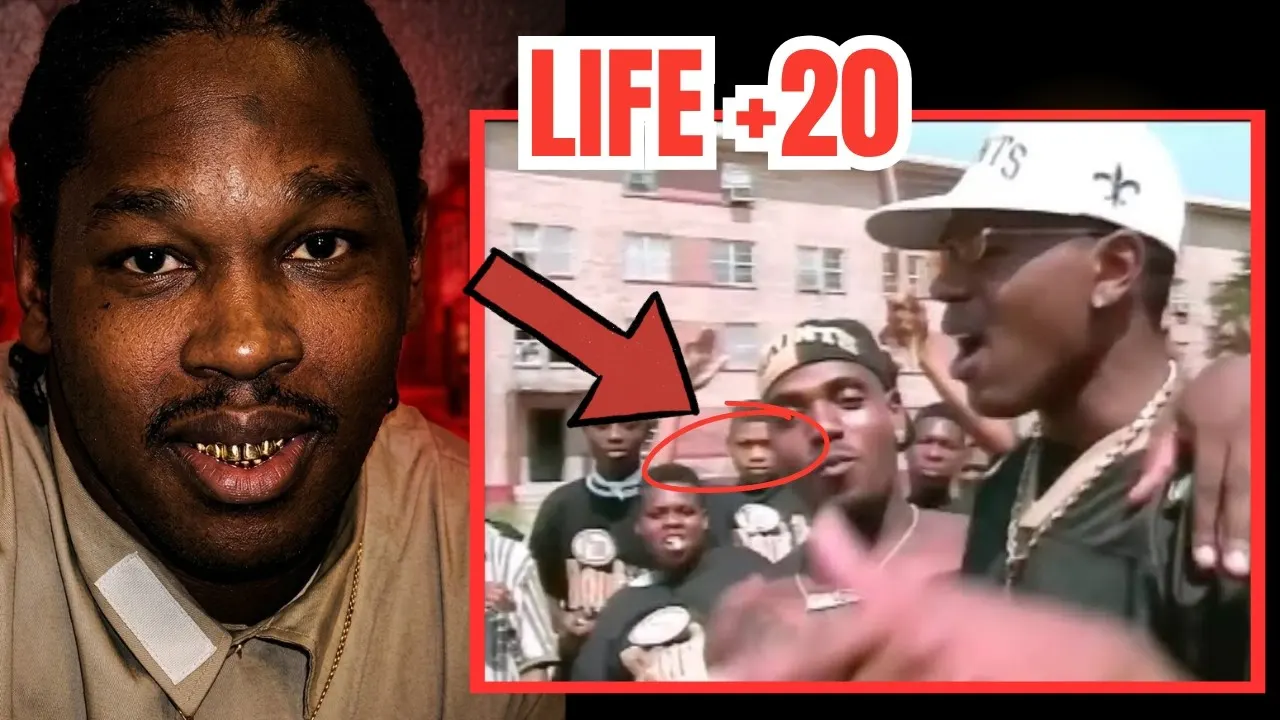
THE CORRECTION. A viral clip, a claim only its speaker ever made, and two New Orleans projects a few blocks apart.
THE CLIP. In October 2025, a video went around of Terrance "Gangsta" Williams — half-brother of Birdman and Slim, the founders of Cash Money Records — talking about a Master P movie shoot in the Calliope projects of New Orleans.
His line: "I ain't get a chance to be in the movie. Now that I think about it, I should have drove around there and just shot it up. Messed the whole thing up."
The headline wrote itself: "Birdman's brother almost shot up Master P's set." And because it was posted one day after Cash Money and No Limit appeared on the same stage in Las Vegas, the internet got the story it wanted: two New Orleans empires, still at war thirty years later.
WHAT HE ACTUALLY SAID. Here's the part the headline skips: he never says he went anywhere near that set.
It's a retrospective regret — a man in his fifties saying what he might have done in 1998, not a confession about what he did. The same interview had already been on the interviewer's channel since July 2024. It became news when it was re-cut.
And the claim that Master P put a price on his head? That has only ever come from Williams himself. In the one printed interview where Master P addresses it, Master P says the man the streets blamed had nothing to do with it.
That's the whole correction: the most explosive claim in the clip is the one the accused man denies and the accuser never substantiates.
WHAT THE CONFLICT ACTUALLY WAS. It wasn't No Limit versus Cash Money. The two label owners were never at war — and Williams says so himself.
It was project versus project: Calliope, where Master P is from and where his family lived, against the Magnolia, where Birdman and Williams came from. Two New Orleans housing developments a few blocks apart, and a feud that had nothing to do with distribution deals.
In 1998, federal agents arrested Terrence Williams in a heroin case. In Master P's old neighborhood, people blamed him for the murder of Master P's cousin.
That's the real story the clip is a fragment of — not a rap beef, a neighborhood one.
THE TWO MEN. Put them side by side, because the distance between them is the whole point:
Master P became one of the richest men in hip-hop — a label, a film company, a clothing line, a sports agency, a business built on ownership.
Terrance Williams served 23 years and 10 months of a life sentence in federal prison before being released, with the reasons for his release sealed by a judge. Reporting at the time noted that his release followed questions about cooperation with prosecutors; that has never been publicly confirmed, and the court record is closed.
And by his own account, the two men have never had a single conversation.
Same city. Same era. Same few blocks. One became a billionaire-adjacent executive, the other lost twenty-four years.
THE BUSINESS PART NOBODY PUTS IN THE CLIP. Here's the comparison that actually explains the gap between those two labels — and it's about deal structure, not toughness.
In 1995, Master P signed No Limit's distribution deal with Priority Records — famously an 85/15 split in No Limit's favor. He kept ownership of the masters and paid a distributor for the pipes. He has described the terms by comparing them to what Michael Jackson's label was getting at the time.
In 1998, Cash Money did its own landmark deal with Universal — a joint venture that put the label inside a major's system with major money behind it.
Both were extraordinary deals. Both were brokered with the involvement of the same person — Wendy Day, the architect of artist-friendly deals in that era.
But they're opposite structures: one is ownership with a distribution fee, the other is a partnership with a major. Ownership compounds. Partnership splits.
HOW THE TWO DEALS AGED, WHICH IS THE REAL SCOREBOARD. No Limit wound down its Priority era and Master P moved into film, clothing, real estate and a sports agency — the diversification path that only an owner can take, because an owner has assets to borrow against.
Cash Money became something else entirely: through the 2000s and 2010s its roster included Lil Wayne, Drake and Nicki Minaj — arguably the most commercially successful label roster of the era — under a structure where the major partner shared in the upside.
Both are enormous successes. They just succeeded in different currencies: one kept the catalog, the other kept the market.
WHY THE CLIP TRAVELS AND THE INVOICE DOESN'T. A rumor about a shooting gets shared. An 85/15 distribution split does not.
The algorithm has no interest in the fact that the real war in New Orleans hip-hop was between two projects, not two labels, or that one man's fortune came from refusing to sell his masters.
So the version that circulates is the one with a gun in it.
SPLASH'S READ: This is a story about two kinds of distance — the few blocks between the Calliope and the Magnolia, and the twenty-four years between two men who came out of them.
The viral version says a Cash Money brother almost shot up a No Limit movie set. The documented version says a neighborhood feud killed Master P's cousin, the man the streets blamed denies involvement, and the man who was blamed spent nearly a quarter century in prison for something else.
The clip is a fragment. The city is the story.
THE HANDSHAKE
When Cash Money and No Limit shared a stage in Las Vegas, the photograph everybody shared was the handshake — Birdman and Master P.
Williams was asked about it and did not play along.
“That handshake wasn't sincere from Bird.” His reasoning: it was initiated by P walking over, which put Birdman in a position where refusing would make him look like the one still holding on. “Bro, you older now. Like you still hovering this. Let it go.” So Bird shook his hand “just 'cause that was the thing to do at the time.”
He hedges it as his reading rather than fact. But it is the reading of a man who was in the room for the whole history, and it reframes the photograph: not a peace, a performance.
WHAT HE SAYS MASTER P DID TO THE CASH MONEY DEAL
Here is the claim with the most weight, and it needs to be labelled clearly as Williams's account, unverified.
Master P signed with Priority first. According to Williams, when Priority then wanted to sign Cash Money, P told them: if you sign Cash Money, I'm leaving.
The consequences he draws are financial. Priority — in his exchange with Vlad — would not have cut the check Universal cut. The number that came up was about $30 million, and Williams's answer was flat: “That check would not have been cut. Master P did not get a check like that.”
And here is what changed. Birdman himself told the story on Cannon's Class in 2026 — that Priority turned Cash Money down and the reason given was that Master P said if they signed Cash Money, he was leaving — “it wasn't enough room for more than one New Orleans [artist].”
Two men, separately, telling the same story about the same deal — one from inside the family, one from the label that signed it. That does not make it proven; it is still an account from an unnamed Priority executive, and Master P has never confirmed it. But the deal itself now has two sources instead of one.
Whether or not the veto is true, the structural point is real and it is the thesis of this whole site: Cash Money signed to Universal and kept control. No Limit signed to Priority. One of those deals produced an empire that is still paying out in 2026. The $30 million, and the masters, is the page for that.
“HOT BOY JIMMY” IS A CAP
Master P has said the Hot Boys name came from his own family — a cousin he called Hot Boy Jimmy.
Williams's response is one of the more complete demolitions you'll hear: “That's a cap. That's a lie.”
His evidence is P's own catalogue. P shouts out everybody from his neighbourhood, he says — “he shout everybody out from the hood, everybody, even Jimmy” — but he never once says “shout out to Hot Boy Jimmy.”
He is careful about the man himself: “Jimmy was a good dude, get money dude, solid dude, gangster” — just not that. “P gave him that name.”
And he says the Cash Money side read P's 2000 film Hot Boyz — with Snoop and Mystikal, spelled with a Z — as trolling. Their answer was to not answer: “We own this name here. That's why he spelled it with a Z.”
THE MOVIE HE LOST
The origin of all of it, in his telling, is not a record deal. It's a part in a film.
Master P was shooting a movie in the Calliope — P's own projects — and Williams was supposed to be in it. Days before the shoot, he fell out with people from the Calliope.
“Right before they did the movie, me and the Calliope bumped heads. So… I can't be in the movie.”
Which is why the most famous line attributed to him — that he should have driven over and shot the set up — reads the way it does on this page: not a threat and not a confession, but a man doing the arithmetic on a missed opportunity thirty years later.
His account of what the 2026 Cash Money and No Limit tour is actually for — and why Wayne and Turk aren't on it — is on the tour page.
Watch: OnPoint Stories.
Sources & claims: The handshake, deal, Hot Boy Jimmy and Calliope-film material above is from
Terrance “Gangsta” Williams in his full DJ Vlad interview (
JME0Gga-TmI, read in full) — his characterisations and recollections, not findings. The claim that Master P threatened to leave Priority if it signed Cash Money is
Williams's unverified allegation; the ~$30 million Universal figure is the number Vlad put to him and he affirmed, and is treated elsewhere on this site as reported.
Sources & claims: SOURCES, CLAIM BY CLAIM — The clip: a video circulated in October 2025 of Terrance 'Gangsta' Williams, half-brother of Cash Money Records co-founders Bryan 'Birdman' Williams and Ronald 'Slim' Williams, discussing a Master P film shoot in New Orleans' Calliope projects and saying he 'should have drove around there and just shot it up'; the discussion was posted by Cam Capone News on 26 October 2025, one day after Cash Money and No Limit figures appeared together on stage in Las Vegas, and the same interview had been published on that channel in July 2024. The correction: Williams does not state in the clip that he went to or near the film set, and describes a retrospective regret rather than an action taken. The assertion that Master P placed a price on his head originates with Williams; in a printed interview addressing the matter Master P stated that the man the streets blamed was not involved in the killing of his cousin. The conflict: the dispute is described as between residents of the Calliope projects, associated with Master P's family, and the Magnolia projects, associated with Birdman and Williams, rather than between the two record labels; Williams states in the same interview that there was no beef between Master P and Birdman. In 1998 federal agents arrested Terrence Williams in a heroin case, and residents of Master P's neighbourhood blamed him for the murder of Master P's cousin. The sentence and release: Terrance Williams served approximately 23 years and 10 months of a federal life sentence before his release, with the reasons for release sealed by the court; reporting noted questions about cooperation with prosecutors, which has not been publicly confirmed and is presented here as unconfirmed rather than as fact. The business comparison: Master P's 1995 distribution agreement with Priority Records was structured as an 85/15 split in No Limit's favour, an arrangement negotiated with the involvement of Wendy Day; Cash Money's 1998 deal with Universal was a joint venture, also involving Wendy Day. The characterisation of these as opposing structures — ownership with a distribution fee versus partnership with a major — and the analysis of their long-term wealth effects are the piece's own. Source video: Gangsta Williams Finally Reveals What Almost Happened on Master P's Movie Set (OnPoint Stories, 20 October 2026) — used as the prompt; the interview history, court facts and deal terms above were verified against reporting.