MASTER P OWNED EVERYTHING — AND THAT'S WHY THE MONEY SURVIVED
NOV 12, 2026 · SPLASH · HIP-HOP · THE LABEL
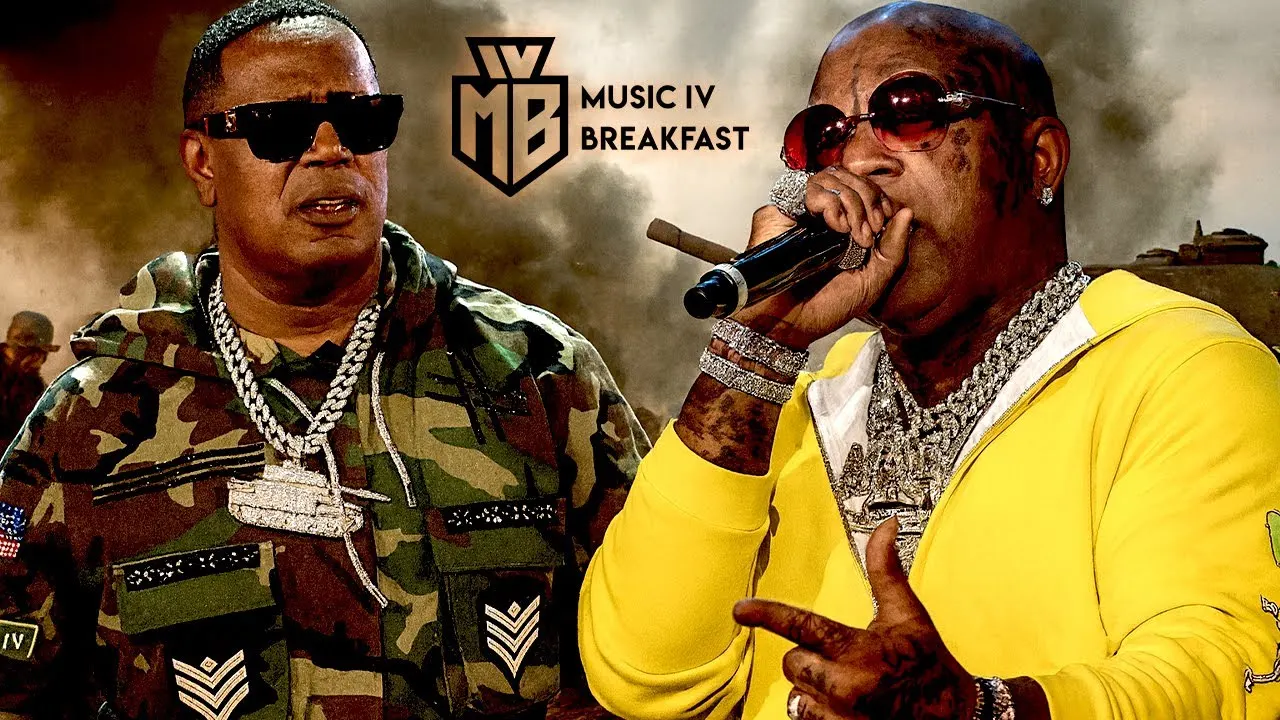
THE DEAL. 85% of the revenue, kept in-house. A studio, a roster, a film company and a catalog — all owned. The empire didn't collapse; it just stopped being the thing everyone talked about.
THE DEAL. In 1995, Master P signed a distribution agreement with Priority Records that was, at the time, unheard of in hip-hop: 85% of the revenue went to No Limit, 15% to the distributor. Most independent labels in that era were lucky to keep half.
That single contract is the reason Percy Miller became one of the richest men in rap. He didn't just make records — he kept the money from them, and then he built the machinery that made them cheaper than anyone else could. (Distribution terms per Music Business Worldwide's account of No Limit's deal structure; Priority distributed the label 1995–2001.)
THE MACHINE. No Limit Records was founded in 1991, and for most of the decade it operated like a factory. The in-house production team, Beats by the Pound, made the beats. The label owned or controlled the studio time, the artwork, the marketing and the release schedule. Artists like Silkk the Shocker, Mystikal, Mia X and C-Murder came through the same pipeline, with the same sound and the same cover art.
That was the thesis Master P bet everything on: own the means of production, and you don't need a major label. In an industry where artists routinely signed away their masters, he kept his — and then bought the pressing plants, the film company, the clothing line and the sports management arm to keep more of the value inside the building.
THE PEAK. It worked beyond anyone's expectations. Master P has said the label sold 75 million records, and even if that figure is his own accounting, the chart run is documented: in the late 1990s No Limit was placing multiple albums in the top ten simultaneously, and at one point the label had a distribution deal so favorable that the majors studied it.
He signed Snoop Dogg in 1998 — a move that cost real money and signaled No Limit was no longer a regional operation. The label's output became a genre of its own: Southern, minimalist, high-volume, cheap to make and profitable at almost any sales level.
THE FLAW. The problem with a factory is that it has to keep running. No Limit released so much material that each album competed with the last one, and the market — which had a finite appetite for the same sound — started to reject the overflow.
That's the structural weakness of owning everything and selling constantly: the brand depreciates with every release. When a No Limit album stopped being an event and started being product, the 85/15 deal didn't matter anymore, because there was less to split.
THE CONTRACTION. By the early 2000s the run was over. The distribution relationship moved to Universal in 2001, and the label was later distributed by Koch. Master P's own album cycle slowed, and the roster that had defined the late 1990s thinned out as the sound went out of fashion. The empire didn't collapse in a single dramatic bankruptcy headline — it shrank, release by release, into a catalog.
Which is the less cinematic and more common ending for a business built on volume. It doesn't blow up. It just stops being the thing everyone is talking about.
WHAT HE GOT RIGHT. Almost everything people mock Master P for turned out to be correct. Own your masters. Control distribution. Build the brand beyond music. Diversify into consumer products. He was doing vertically integrated hip-hop economics a decade before the rest of the industry realized the album was dying.
He also did what almost nobody in his position does: he kept the money in his family and his city, and he turned a New Orleans label into a national company while the majors were still deciding whether Southern rap was a fad.
SPLASH'S READ: "Master P tried to own everything" is usually told as a cautionary tale, and it shouldn't be. Owning everything is why he's rich. What he couldn't own was the public's appetite — and no contract can secure that.
The real lesson is about the difference between owning a business and owning a moment. He built the factory, the distribution and the catalog, which is why the catalog still pays. The moment belonged to 1998, and it left on schedule.
Compare him to the artists who signed those same contracts with the majors and never saw a dollar again. Master P's mistake wasn't greed. It was the assumption that the machine could run at full speed forever.
THE MILLION DOLLARS HE TURNED DOWN
Master P has told this story many times, and the short version is the clearest explanation of the 85/15 deal on this site — because it explains what he was refusing.
Jimmy Iovine offered him $1 million. And the warning that came with it: “He told me if I don't take that check, nobody's going to do business with me.”
His answer started with arithmetic nobody else in the room had done:
“If this white guy offered me a million dollars, he don't even know me. I'm a kid from the projects. How much am I really worth?”
Twelve kids in the house. Raised by grandparents. So he did the division: “If I gave everybody $100,000, we still broke.”
Then he read the contract.
“7 years I couldn't use my name. They own my rights, everything. And so I was going to get 12% of record.”
And he turned the percentage into money, which is the move almost nobody makes at 25:
“Back in the days we selling cassettes for $9, selling CDs for $20. Imagine me making that $20 and giving him 12 cents.”
THE AVON LADY AND THE $300,000
He flew home with $500 in his pocket, and he and his brother nearly fought on the plane about the million dollars they were leaving on the table.
His grandfather had told him one thing before he died: never do business when you're desperate. He has quoted that line ever since.
What he did instead is the part that matters: he watched the Avon lady in his neighbourhood sell out of the trunk of her car, and copied it — The Ice Cream Man, city to city, hood to hood: Atlanta, Texas, Chicago, New York.
“And I had saved up $300,000.”
TWENTY-FIVE THOUSAND DOLLARS TO ASK ONE QUESTION
Then he went looking for the best deal in music, and paid for the answer.
He decided the biggest artist alive was Michael Jackson, so he called Jackson's attorney. The man's price to talk: $25,000.
“I said, $25,000 to talk to you? I said, okay, sir, I'm going to give you the $25,000. That was the best money I ever spent.”
What he learned: Michael Jackson was getting 22% of records. “He own Neverland. He got 22% of record. This got to be crazy.”
Then the answer he was actually buying: you can get a distribution deal — but you need $200,000 in marketing money, and that is the only way in.
DID MASTER P OWN AN NBA TEAM?
No. He never owned a team — he tried out for two.
January 1999 — the Charlotte Hornets. He was on the training camp roster for ten days, invited at the request of a Hornets player.
October 1999 — the Toronto Raptors. He went through tryouts and was dismissed on 27 October 1999, reported by CBS and the Associated Press.
That’s the whole basketball career: ten days in Charlotte and a preseason tryout in Toronto. The man who owned his own label never owned a team — and the questions about which NBA franchise he bought are questions about a thing that didn’t happen.
THE 85/15, IN HIS OWN WORDS
And here is the deal every other page on this site keeps running into, described by the man who took it:
“All I wanted after that date was a distribution deal, cuz the distribution deal is you own 85% of the company and they own 15%. It never been done before.”
Priority Records offered it. They asked the obvious question — do you have the $200,000? — and he gave the answer that makes the whole story:
“He said, where you get it from? I said, I sold my records out the trunk of my car.”
Which is why the 85/15 keeps showing up in other people's stories. It is the deal Wendy Day brokered at Priority — the same structure she carried into the Cash Money negotiation with Universal, as the Lil Wayne page sets out. One deal in 1995 became the template for the next twenty years.
And the contrast with Iovine's 12% is the point of this page: 12% of a record you don't own, for seven years, without your name — versus 85% of a company you do. The million dollars was the cheaper offer.
DID HE QUIT MUSIC?
He said he was stepping away — in July 2025.
After headlining the Essence Festival that month, Master P told People he was done with music as a performer and moving into his next chapter — he was 55 at the time.
The date matters, because this keeps resurfacing as breaking news. It’s 2025, not last week. And it was framed as a calling rather than a retirement: the point wasn’t that he stopped working. It was that he stopped rapping for money.
Watch: Music IV Breakfast.
Sources & claims: SOURCES, CLAIM BY CLAIM — Founding and distribution: No Limit Records founded by Percy Miller in 1991; distributed by Priority Records 1995–2001, Universal 2001–2004, and Koch thereafter. The 85%/15% split in No Limit's favour is from Music Business Worldwide's account of the deal. Roster and production: Beats by the Pound as the in-house production team; artists including Silkk the Shocker, Mystikal, Mia X and C-Murder. No Limit label history and contemporary Billboard reporting. Sales: Master P's own figure of 75 million records sold, described here as his accounting rather than an audited number. Snoop Dogg's 1998 signing is a matter of record. Contraction: No Limit moved to Universal in 2001 and later Koch; the label's release pace slowed through the early 2000s. The piece deliberately avoids stating a specific bankruptcy filing where the sourcing is not reliable. Biographical note: Percy Miller's birth year is given as 1970 in most references (Wikipedia, BlackPast) and 1967 in some profiles (The Ringer); no birth year is asserted above. Interpretive passages about vertical integration and the decline are the piece's editorial judgment and are labeled as such. Source video: "Master P's Biggest Mistake Was Trying to Own Everything" (OnPoint Stories, Nov 2026) — used as the prompt; its cautionary framing is inverted above because the vertical integration is what preserved the value.