THEY DIDN'T START IT. THEY INHERITED IT.
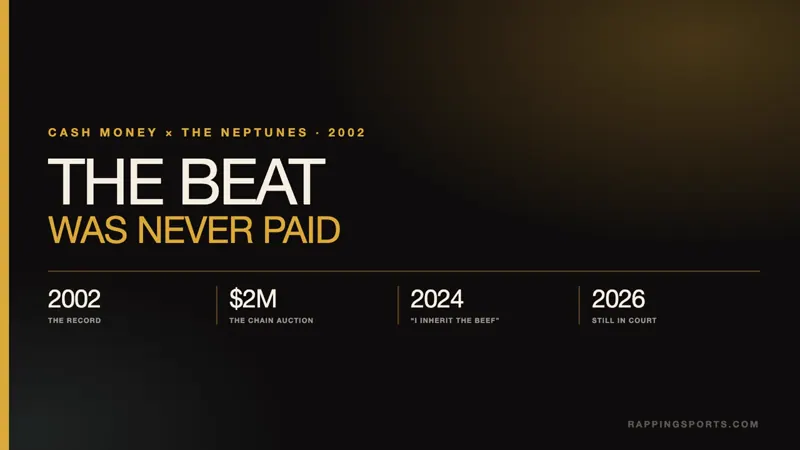
In 2002, Birdman and Pharrell Williams made a hit record together.
In 2018, Birdman’s biggest artist and Pharrell’s biggest artist went to war with each other, and it was the same war.
In 2024, Kendrick Lamar explained why he was in it: “I don’t like you poppin’ shit at Pharrell. For him, I inherit the beef.”
That is the whole story. Not a feud between two rappers — a feud between two employers, fought by whoever is on the roster when the bill comes due.
The shooting — May 7, 2024 — occurred outside Drake’s Bridle Path mansion in Toronto; a security guard was taken to hospital with serious but non-life-threatening injuries, per Toronto police reporting. Drake’s subsequent defamation lawsuit against Universal Music Group over “Not Like Us” described the night in detail, including efforts to keep the guard alive before paramedics arrived. No connection between that shooting and any artist named on this page is asserted here; no one has been charged in connection with it in anything this page has seen.
The unpaid-production claim — that Birdman failed to properly pay Pharrell Williams and Chad Hugo for “What Happened to That Boy” — is attributed to DJ Ebro Darden, and is repeated in the established timeline coverage of the Drake/Pusha T feud, which traces the dispute back to it. It is one industry figure’s account, widely repeated; no Neptunes lawsuit against Cash Money over this record appears in the public record this page has seen.
The two bosses
Start with the org chart, because the org chart is the story.
Birdman owned Cash Money and, through Young Money, employed Drake. Pharrell Williams co-founded Star Trak Entertainment with the Neptunes in 2001, partially funded through an Arista joint venture, and his first signing was a duo from Virginia Beach he had known since high school: Clipse — Pusha T and No Malice.
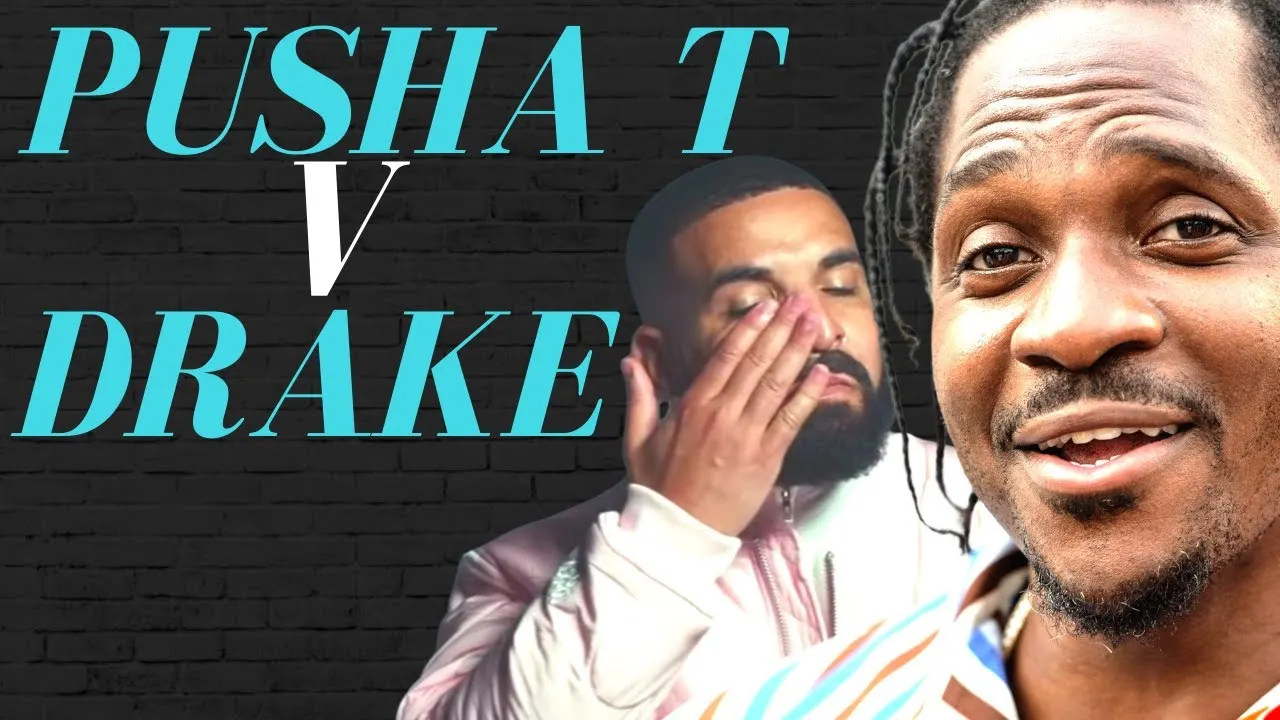
So when Drake and Pusha T beefed in 2018, the man who signed Drake was fighting the man who signed Pusha. Neither of them wrote a bar.
2002 — the bosses do business
Before this was a war it was a session.
“What Happened to That Boy” is the second single from Birdman’s debut album Birdman, released November 26, 2002 on Cash Money and Universal, and it features Clipse. It was produced by The Neptunes.
Read that again. The record that would eventually be used as a weapon in this story is a Cash Money single, featuring Pharrell’s group, produced by Pharrell. Clipse’s own debut Lord Willin’ had come out the same year on Star Trak, led by “Grindin’.”
And here is the part the record itself does not tell you.
According to DJ Ebro Darden of Hot 97, Birdman failed to properly pay Pharrell Williams and Chad Hugo — the Neptunes — for their production work on that record.
If that account is right, then the collaboration at the top of this page is also the injury at the top of this page. Two producers deliver a hit for another man’s label, and the check does not arrive. Everything downstream — the BAPE cover, “Mr. Me Too,” the ghostwriting allegation, and eventually a war between two employees — traces back to a payment that people in the room say was never made properly.
Be precise about what that is. It is a specific, named account from a well-placed industry figure, repeated widely enough that it has become the standard origin story for this feud. It is not a court filing, and no Neptunes lawsuit against Cash Money over this record appears in the public record this page has seen. It is reported here as Ebro’s account, not as an established fact.
Which means the neat version of this story is wrong. They were not getting along and getting paid. They were getting along, and one side says it was not getting paid — and that is the seed of everything after it.
2006 — the BAPE cover
The first shot was not about music. It was about a sweatshirt.
Lil Wayne appeared on the cover of Vibe in a Bathing Ape hoodie. BAPE was, at that moment, a brand Clipse and Pharrell had done more than anyone to make famous in American rap.
There was a second thing. Wayne was rapping about cocaine, and Clipse were the self-described coke rappers of the era. Between the branding and the subject matter, Pharrell’s camp read it as a theft.
Clipse answered with “Mr. Me Too” in 2006, and it is remembered as a diss at Wayne. The lines were vague enough that the group could deny it later — and No Malice said in 2017 that it was not about Wayne at all.
That denial matters and it belongs in the page: the most famous shot in this phase is disputed by one of the men who fired it.
Wayne’s answer, in a Complex interview, was that they needed a record like “What Happened to That Boy” to get popular — and, in the retelling, a dismissal of Pharrell that is not repeatable here.
The ghostwriting seed
Here is where the 2018 war actually got loaded.
Clipse, in a Laced magazine interview the following year, said that Birdman’s verse on “What Happened to That Boy” was written by Gillie the Kid — a Cash Money artist who had fallen out with Wayne and who, they pointed out, appears briefly in the video.
Sit with that. In 2007, Pharrell’s artists accused Cash Money’s boss of not writing his own verse. Eleven years later, Pharrell’s artist would end Drake’s career with a ghostwriting accusation and a photograph. The template was set a decade before anybody used it.
2008 — the direct hit
Clipse stopped being subtle.
The “Re-Up Gang Intro” in 2008 contains a line that names Birdman’s stage name and does not leave room for interpretation: “I’d have to kill baby.”
That is a rap bar about the man who ran the label, and it went out on a mixtape intro.
Then it went quiet for ten years
And this is the part that makes the inheritance theory obvious instead of cute.
Drake signed with Young Money and Cash Money in 2009, three years after the Vibe cover, into the exact label Clipse had been fighting.
Wayne went to Rikers in 2010 and served about eight months. With the biggest name in the building locked up, the temperature dropped.
Pusha T said in a 2011 Complex interview that the beef was finished.
He meant it. It was finished between the people who started it.
2018 — the employees inherit it
It took one album for the second generation to pick it up.
“Infrared” is the final track on Pusha T’s DAYTONA, released May 25, 2018, produced by Kanye West. It revives the ghostwriting allegation against Drake.
Drake answered the same day with “Duppy Freestyle” — three minutes and eight seconds, self-released, within hours.
Four days later, on May 29, Pusha released “The Story of Adidon.” The title is a construction: Adonis, the name of the child he alleged Drake was hiding, plus Dennis Graham, Drake’s father.
And the cover art was a photograph of Drake in blackface.
The photograph
This is the moment the beef stopped being a rap argument and became an evidentiary one.
The image was real. It was not fabricated, doctored, or a still from a skit. On May 31, 2018, Drake issued a statement on Instagram explaining it as a project from 2007 about young Black actors struggling to get roles and being typecast. Reporting at the time described the photo as circa 2007 or 2008.
Whatever you think of the explanation, the sequence is what matters: Pusha did not win that round with a better verse. He won it with a document.
Drake never released a record answering “Adidon.”
What Drake never did
The record that ends this part of the story is the one that was never made.
Drake did not release a song answering “The Story of Adidon.” Within a week he had put out three-minute replies to a verse, and to a photograph he said nothing on a track at all.
What he did instead was confirm the substance. His Scorpion album arrived that June, and it addresses his son directly — on the closing track, “March 14,” he names the date and acknowledges Adonis.
That is the outcome nobody predicted in 2018: the allegation was true, the explanation for the photograph was on the record, and the battle was still lost. Because a beef is judged on the exchange, and one side never exchanged anything.
The answer he did give — and who he gave it to
Drake never made a record for Pusha T. He made one for Pusha T’s boss, and he put it on somebody else’s album.
Follow the second org chart first. Pharrell signed Pusha T at Star Trak in 2001. Then Pusha signed to Kanye West’s GOOD Music, founded in 2004 — and in November 2015 he was named president of the label.
Kanye produced DAYTONA in full, including the beat under “Infrared.” So the record that reopened the war in 2018 was built by Pusha’s new employer, aimed at the artist of Pusha’s old rival’s employer.
Then, in August 2018, came “Sicko Mode” — Travis Scott’s record, on Scott’s album Astroworld, with a Drake verse on it. Travis Scott is Kanye’s protege.
It is not one bar. Read the whole run, as recorded:
“767, man, this shit got double bedroom, man
I still got scores to settle, man
I crept down the block, made a right, cut the lights, paid the price
Niggas think it’s sweet, it’s on sight
Nothin’ nice, baguettes in my ice
Jesus Christ, checks over stripes
That’s what I like, that’s what we like
Lost my respect, you not a threat”
Start at the top. “I still got scores to settle” is the frame for everything that follows. Then he describes a route — crept down the block, made a right, cut the lights, paid the price — and says it is on sight.
Only after all of that does he get to the sneakers. A check is the Nike swoosh. Stripes are Adidas. Kanye had a signature Adidas deal; Drake was a Nike artist.
And then, one line later: “lost my respect, you not a threat.”
That is why the reading is not confined to one lyric, and it is why people call the verse a diss rather than a subliminal. A man does not open with “scores to settle,” describe a drive, and then name a rival’s shoe contract by accident.
What it is not: a record aimed at Pusha T. The shot is fired at Kanye, on Travis Scott’s album, and Pusha — the man who actually ended the exchange — is not mentioned anywhere in it.
Look at what that actually is. A man could not answer his rival, so he answered his rival’s boss, on his boss’s protege’s album, with a line about a sneaker contract. Nobody in this chain has ever gone around the org chart. They all go through it.
2024 — the third generation says it out loud
Six years later, another artist explained the rules of this system better than any journalist has.
In “euphoria” (2024), Kendrick Lamar addresses Drake directly: “I don’t like you poppin’ shit at Pharrell. For him, I inherit the beef.”
That is not a metaphor. That is a man stating, in a diss record, that his obligation to Pharrell Williams is sufficient cause to enter a war he was not in.
Two generations after Birdman hired Pharrell for a single, and six years after Pharrell’s artist ended Drake’s run, Kendrick signed on to the same side of the same fight for the same employer.
SPLASH'S READ
Nobody writes this story as a corporate one because rap beef is more fun when it is personal. But look at what actually happened.
A label owner hired a producer in 2002. The producer’s group took offense at the label’s star in 2006. The group’s members accused the label owner of using a ghostwriter in 2007 — and a decade later the producer’s artist used a ghostwriting allegation to end the label’s biggest signing.
And when the answer finally came, it did not go to the man who threw the punch. It went to his boss, on his boss’s protege’s album, in a line about sneakers.
Then, in 2024, a third artist announced he was joining because of his debt to the producer.
That is not a beef. That is a supply chain. The grudges outlive the people who hold them, and they transfer with the roster — which is why the same fight keeps getting fought by different men in different decades.
Kendrick is the only one who ever said the quiet part on a record: he inherited it. Which means everybody else did too, and most of them never noticed.
The plainest version of the argument
Strip every record out of this file and what is left is one thing: a boss did not pay the man who made the beat.
Everything after that — the hoodie, the interview, the mixtape intro, the ghostwriting claim, the two albums released four days apart in 2018, the five-minute verse in 2026 — is men with pens and phones. Not one of them ever put hands on another over any of it. The most violent thing in the whole chain is a line about hiding the Bible so God does not have to watch.
Which is the part that gets lost: this is the most consequential rap rivalry of the century and it has cost its participants almost nothing physically. Careers moved. Money moved. Nobody was hurt.
There is exactly one exception, and it belongs in the record. On May 7, 2024, a security guard working outside Drake’s Bridle Path mansion in Toronto was shot and taken to hospital with serious but non-life-threatening injuries. Drake’s later defamation suit against Universal Music Group over “Not Like Us” described him and others spending half an hour trying to keep the guard alive before help arrived.
That is the moment the war stopped being only pen and Twitter, and it is the reason the rest of this page should be read with some care. Words are not nothing. One night in May, outside a house in Toronto, the words were standing next to a man who got shot.
Sources. Star Trak Entertainment was formed in 2001 by the Neptunes, partially funded through an Arista joint venture; Pharrell Williams signed Clipse through the imprint in early 2001. Clipse’s Lord Willin’ followed in 2002. Per Star Trak and Clipse’s documented deal history.
“What Happened to That Boy” is the second single from Birdman’s debut album Birdman, released November 26, 2002 on Cash Money and Universal, featuring Clipse and produced by The Neptunes.
“Mr. Me Too” — Clipse, 2006; long read as a diss at Lil Wayne following his Vibe cover in a BAPE hoodie. No Malice stated in 2017 that it was not about Wayne. Both readings are reported here; this page does not resolve the dispute.
The Gillie the Kid claim — that Birdman’s verse on “What Happened to That Boy” was written by Gillie — is Clipse’s assertion in a Laced magazine interview, reported in the timeline coverage of this feud. It is an allegation by an opposing party and is not presented as established fact.
“Re-Up Gang Intro” — Clipse, 2008; the “kill baby” line refers to Birdman’s stage name at the time.
Drake signed with Young Money/Cash Money in 2009 (announced June 30 and September 2009 per trade reporting). Lil Wayne served roughly eight months at Rikers beginning in 2010. Pusha T described the feud as finished in a 2011 Complex interview.
“Infrared” — final track on Pusha T’s DAYTONA, May 25, 2018, produced by Kanye West. “Duppy Freestyle” — Drake, released the same day, 3:08, self-released. “The Story of Adidon” — May 29, 2018, with the blackface photograph as cover art. Per Billboard, Pitchfork and the published timeline coverage.
Drake’s response to the photograph was an Instagram statement on May 31, 2018 describing it as a 2007 project about young Black actors being typecast and stereotyped. Reported by CNN and others. Drake did not release a record answering “The Story of Adidon.”
Scorpion — Drake, released June 29, 2018; the closing track “March 14” addresses his son Adonis directly.
Pusha T was named president of GOOD Music in November 2015, per Billboard and Pitchfork. GOOD Music was founded by Kanye West in 2004.
“Sicko Mode” — Travis Scott featuring Drake, on Astroworld, August 2018. Lyrics quoted above are as recorded on the released track, from the published Astroworld lyric sheet (Part III, Drake’s verse). The line is “it’s on sight” — there is no simile attached to it on the record. The reading of the verse — the “checks over stripes” line and the status bars around it as aimed at Kanye’s Adidas partnership and his relationship to brands — is a widely held interpretation, not a credited statement of intent. Drake has not confirmed it; Kanye has since described the line that way himself. This page reports it as interpretation, because that is what it is.
The Kendrick Lamar line — “I don’t like you poppin’ shit at Pharrell, for him, I inherit the beef” — is from “euphoria” (2024).
Allegations against individuals in this story are attributed to the parties making them. No court has adjudicated any ghostwriting claim described here, and the Gillie the Kid assertion in particular is one side’s account.
The ledger — six artists, one label · Four songs, twenty-eight years, one city · The $30 million Universal deal · B.G. calls Mannie Fresh “washed” · Mannie Fresh got a quarter of the show money · Turk: “I don’t need them” Jay-Z offered him $175,000 and he laughed The tour that put New Orleans in front of New York The other founder: Ronald Slim Williams B.G.'s side: the album was in the CD player