AMERICANS STOPPED SEEING
JAPANESE CARS AS CURIOSITIES.
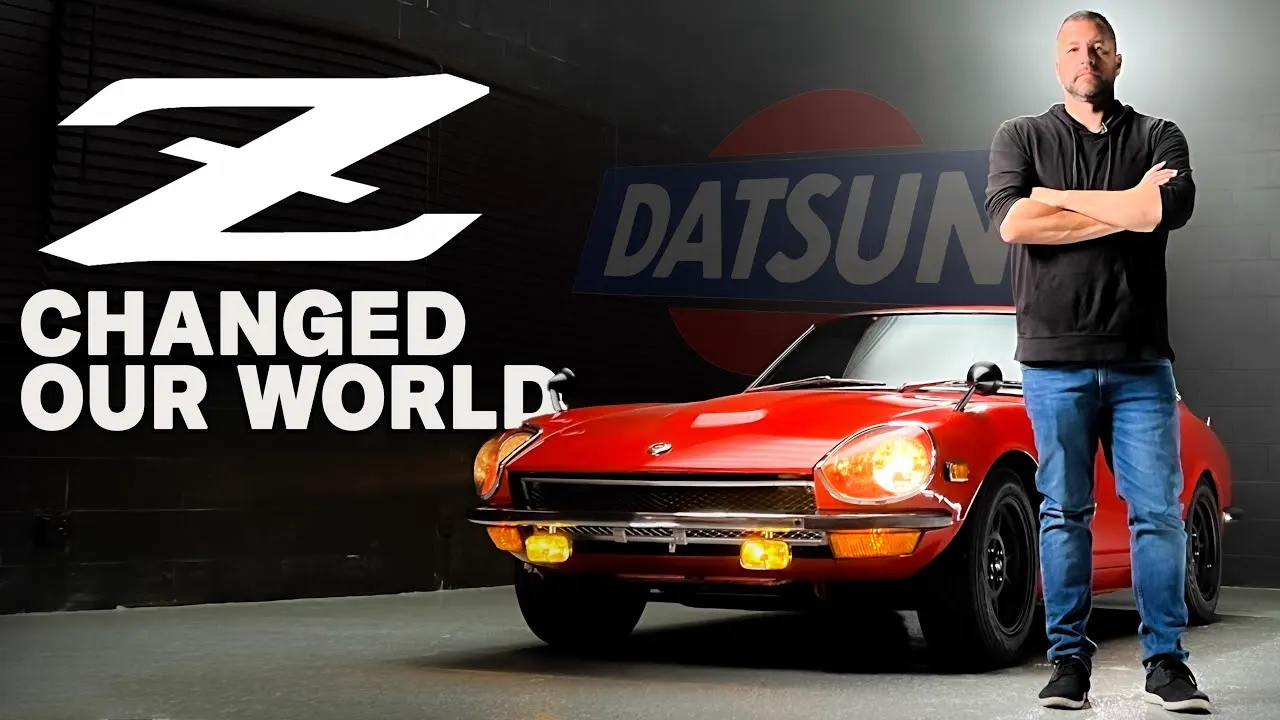
Twenty years before Lexus, there was this. Both are stories about the same thing: what Americans were willing to believe about a Japanese car.
The letter
Nissan added a letter to its sports car name and picked Z — the last letter of the alphabet, chosen because it meant the end, the last word, the ultimate.
In Japan the car was the Fairlady Z. In America it was the Datsun 240Z, and it did something no Japanese car had done before: it made Americans stop looking at Japanese cars as curiosities and start buying them.
The name, which is its own story
The company was founded in 1911 as the Kaishinsha Motor Car Works. It was renamed DAT to honor its three financial backers — which in Japanese is pronounced datto, meaning “with the swiftness of a hair in flight.”
Twenty years later the company was reorganized and the name became Datsun — literally “son of DAT.”
And then the superstition. In Japanese, “son” can also be read to mean a loss. When a typhoon flooded the works, the company took it as a bad omen and changed the O to a U — removing the curse, and leaving the sun, which is an important image in Japanese culture.
A car company changed its name because of a flood and a pun.
The engine that was a Mercedes
Here is the part almost nobody knows. The 240Z’s straight six was, at its root, a Mercedes-Benz design — and Nissan only had it because of a merger.
Nissan had merged with Prince, a high-end Japanese maker that was in trouble, at the suggestion of the Japanese government. Prince held a license to manufacture a 1950s-era Mercedes-Benz engine. That is where the Z’s inline six came from.
The version that reached America was a 12-valve, 2.4-litre unit making 151 horsepower — and it sounded so good that more than one journalist mistook it for a Ferrari V12.
0–60 in under 8 seconds, a 16-second quarter mile, and over 120 mph if you kept your foot in it. You could get similar acceleration from a Porsche 911 or a Ferrari 246 Dino — but you would have to add a “1” to the front of the 240Z’s price to buy the Ferrari.
The chassis, borrowed from itself
Nissan did not invent a supercar suspension. It took the front MacPherson struts from its own 510 sedan, married them to a new Chapman strut independent rear, and added rack-and-pinion steering and front disc brakes.
For the late 1960s that was serious equipment. And it is the reason the car worked: it was not exotic, it was carefully assembled from parts the company already understood.
The price, and who it was for
The 240Z cost about $3,500. A Corvette was $5,500. A Porsche 911 was $6,000.
And the brief was explicit: it should be a true touring GT for the young man who never had a sports car but wanted a Porsche or an Austin-Healey — the guy who goes to see what a Porsche costs, falls over at the price, and comes back to reality.
It was engineered specifically for the American market — which is exactly what the British roadsters had never done.
Why it ended the British roadster
The 240Z looked like the most beautiful and expensive cars in the world — Ferraris and Jaguar E-types — and it was built better than any of them.
There is a quote that says it all:
And the market answered immediately. The 240Z outsold the similarly priced six-cylinder MG by a factor of 17.
Then the validation. 1971 Car and Driver Car of the Year. And a year later, Road & Track found that 91% of 240Z owners said they would buy another one.
The after
The 240Z became the 260Z, then the 280Z — displacement bumps that could not quite offset the power lost to 1970s emissions equipment. In 1979 the 280ZX arrived, less a sports car than a GT, and the Z began to slip.
And then a branding decision made it worse: Datsun became Nissan, and a generation of Americans who had grown up knowing the car as a Datsun had no idea who made the Z anymore.
That argument is still going on today.
SPLASH'S READ
This page and the Lexus one are the same story told twenty years apart, and together they are the most important thing in this machines file.
In 1957 Toyota sold 257 Toyopets in America and withdrew the car in shame. In 1969 a Japanese company built a car that looked like a Ferrari, cost half a Corvette, and had door gaps a Jaguar could not manage — and American buyers stopped laughing. Twenty years after that, Lexus beat Mercedes at its own game at half the price.
The 240Z is the hinge. Everything Japan did to the American car market afterwards runs through it.
And the joke at the top of the story is that the 240Z America got was not even the ultimate Z — Japan kept a different, smaller-engined Fairlady for itself. America got the compromised version and it was still good enough to end an industry.
That is the thing worth keeping. The British roadster did not die because the 240Z was more exotic. It died because the 240Z was more ordinary — a car built from the company’s own sedan parts, priced for a kid out of college, that started every morning.
Romance lost to reliability, and reliability was the point.
The name. Founded in 1911 as the Kaishinsha Motor Car Works; renamed DAT for its three backers (pronounced datto, “with the swiftness of a hair in flight”); reorganized as Datsun — “son of DAT” — and the O changed to a U after a typhoon flooded the works, because son could be read as “loss.” The Z nameplate was chosen as the last letter of the alphabet — the end, the last word, the ultimate. The car was sold as the Fairlady Z in Japan and the Datsun 240Z in America.
The engine. Nissan merged with Prince, which held a license to build a 1950s-era Mercedes-Benz straight six — the origin of the Z’s inline six. US specification: 2.4 litres, 12 valves, 151 hp, with independent rear suspension, rack-and-pinion steering and front disc brakes; the front suspension derived from the 510.
Performance and price. 0–60 under 8 seconds, quarter mile in the 16s, over 120 mph. Price about $3,500 against roughly $5,500 for a Corvette and $6,000 for a Porsche 911; the Ferrari 246 Dino cost roughly ten times the 240Z.
The market result. The 240Z outsold the similarly priced six-cylinder MG by a factor of 17; it won the 1971 Car and Driver Car of the Year, and Road & Track later found that 91% of 240Z owners would buy another.
The door-gap quotation comparing early Jaguar and Japanese panel fit is reproduced as given in Jason Cammisa’s Hagerty Revelations episode on the 240Z, which prompted this page. The characterization of the 240Z as the car that made Americans stop treating Japanese cars as curiosities, and the account of its brief’s targeting a young buyer who wanted a Porsche or an Austin-Healey, are from the same episode.
The succession — 260Z, 280Z with emissions-related power loss, the 1979 280ZX repositioned as a GT, and the Datsun-to-Nissan rebrand — is documented model history.
Labeled as analysis. The reading that the 240Z is the hinge between Toyota’s 1957 failure and the Lexus LS 400, and the conclusion that the British roadster lost to ordinariness rather than exoticism, are this page’s interpretation.
This page contains no photograph of any person.
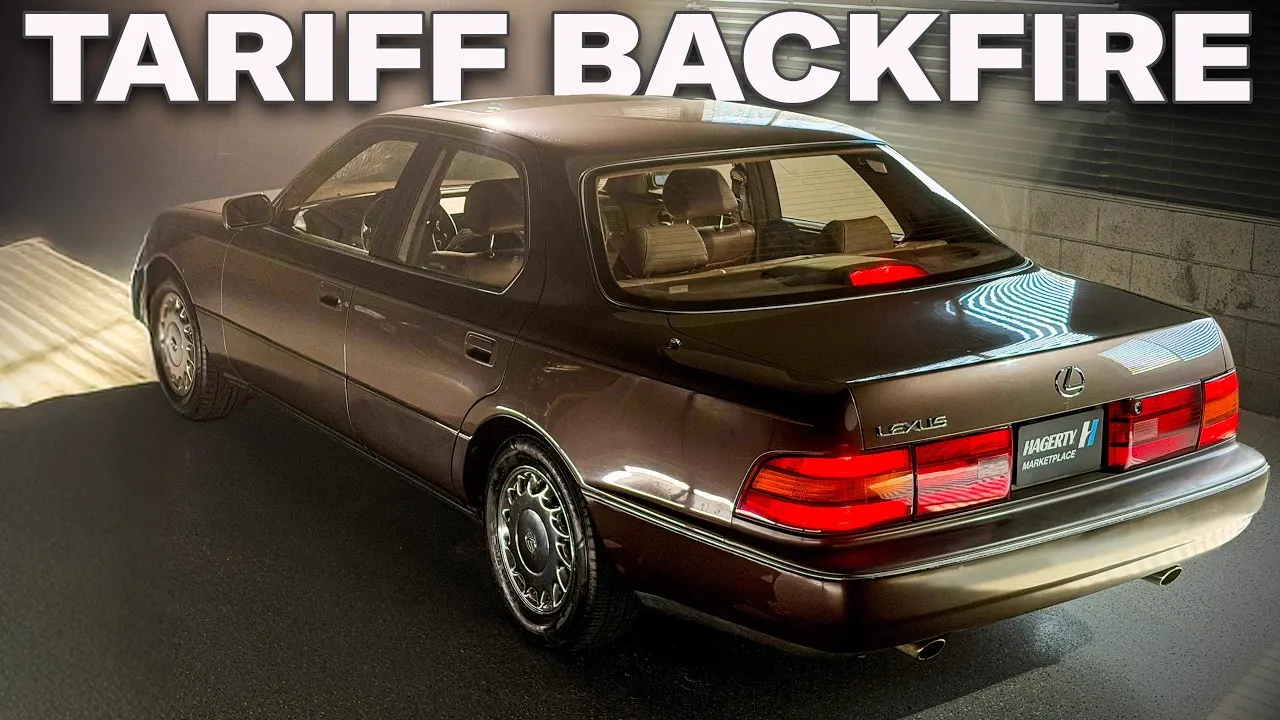
Twenty years later: the quota that made Lexus
The supercar that was too good to sell
Two million a car to break even
It started as a truck engine
They built a car for a future that bought an SUV The GT40 wasn't really a Ford The E30 M3 sat unsold for years The gullwing doors were a math problem The engine was designed by Lotus and built by a boat company The 924 was a Volkswagen consulting gig